Orthodontic Braces: Complete Guide to Treatment, Types & Benefits
Orthodontic braces are one of the most effective treatments to correct misaligned teeth and improve overall oral health. They not only enhance your smile but also help in better chewing and speech.
With advancements in dentistry, braces today are more comfortable, aesthetic, and faster than traditional methods.
What Are Braces?
Braces are dental appliances used to align teeth and jaws using gentle pressure over time. They gradually move teeth into proper position.
Types of Braces
Metal Braces – Strong and cost-effective
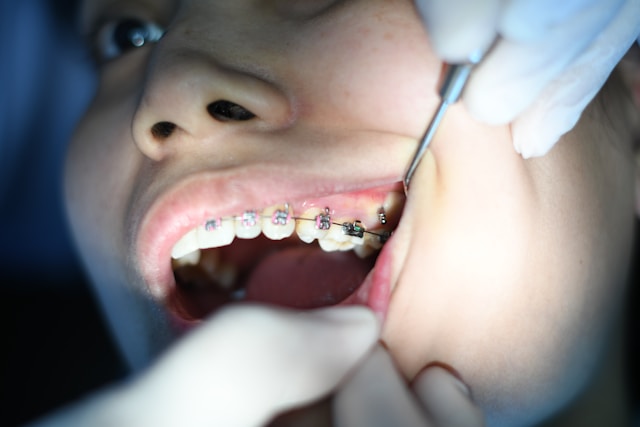
When you think of braces, traditional metal braces might be what you imagine. Metal braces use stainless steel bands, brackets and wires to gently shift your teeth over time. A dentist or orthodontist will bond (glue) a bracket on each tooth, then place a thin, flexible archwire over the brackets. Tiny elastic bands called ligatures keep the wire firmly in place. Metal braces are visible when you smile. You can choose clear or tooth-colored ligatures to make your braces less noticeable. Or, if you’re feeling festive, you can choose brightly colored ligatures.
Ceramic Braces – Tooth-colored and less visible
Ceramic braces — sometimes called clear braces — work the same way as metal braces. The key difference is that the brackets, wires and ligatures are tooth-colored, so they blend in with your smile. Ceramic braces are still visible, but they’re less noticeable. One drawback to ceramic braces is that they’re more fragile than metal braces, so they’re more likely to break.
Lingual Braces – Placed behind teeth
Lingual braces are similar to traditional braces. But they go on the back surfaces of your teeth instead of the front. Most people who choose lingual braces do so because they don’t want other people to be able to tell they have braces.
Self-ligating braces
Self-ligating braces look similar to traditional metal braces. The main difference is that, instead of ligatures (tiny elastic bands), self-ligating braces use a built-in system to hold the archwire in place.
Clear Aligners – Removable and invisible
Sometimes called “invisible braces,” clear aligners are a braces alternative. Instead of brackets and wires, clear aligners use a series of custom-made trays to straighten your teeth over time. With these systems, you wear each set of aligner trays for approximately two weeks. Then, you swap those trays out for the next set in the series. Unlike metal braces, clear aligners are removable. But you have to wear them for at least 22 hours every day. You should only take your aligners out to eat, drink and brush your teeth.
Benefits of Braces
Improves smile and confidence
Corrects bite issues
Prevents future dental problems
Enhances oral hygiene
Treatment Process
The process begins with consultation, followed by placement of braces, periodic adjustments, and finally a retention phase to maintain results.
Cost of Braces in India
Braces cost varies depending on type: Metal braces start from ₹25,000 while clear aligners can go up to ₹2,50,000.